
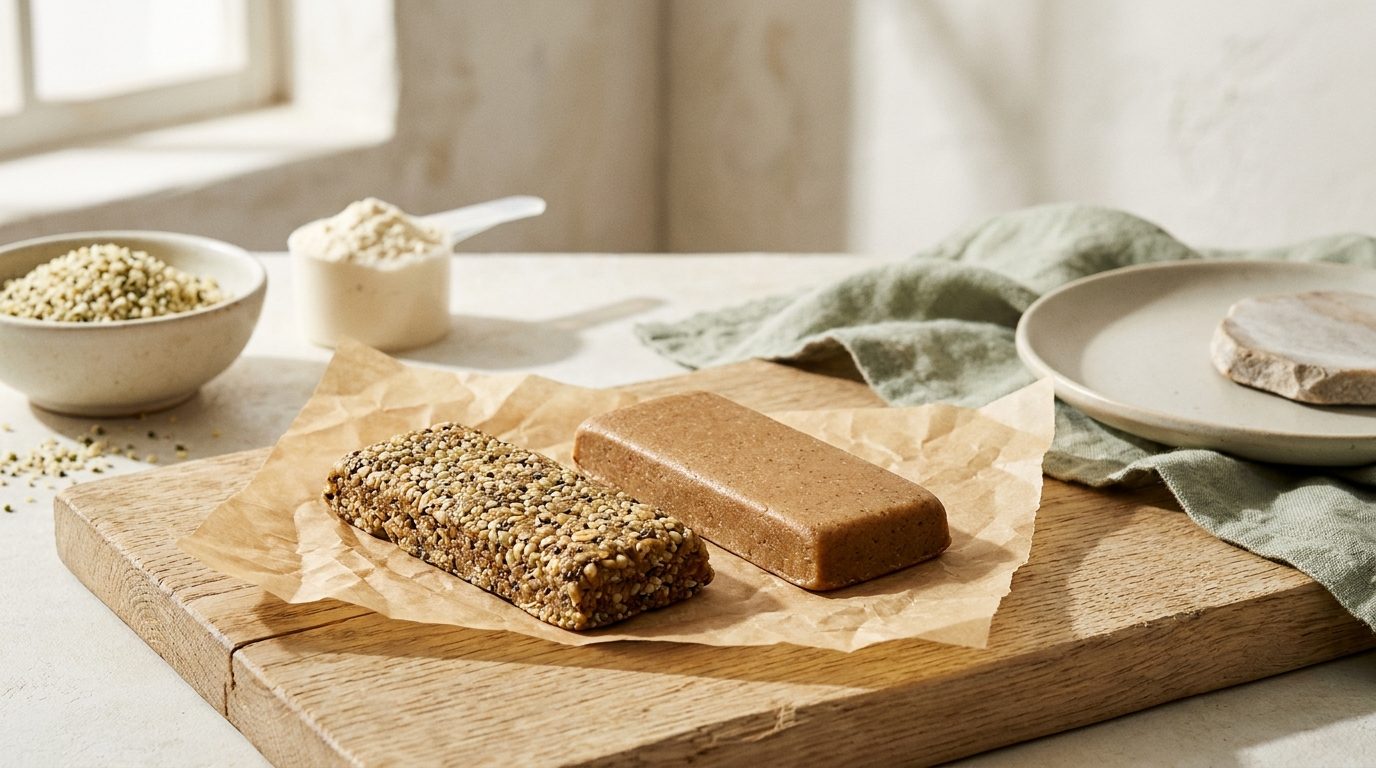
Hemp and whey are both perfectly good ways to get protein into a bar, but they are not interchangeable, and the right pick depends on your gut, your diet, and how many grams you actually need. This is a direct comparison on the four things that genuinely separate them rather than a tour of every bar on the shelf.
Is hemp protein or whey protein easier to digest?
This is the dividing line most people feel first. Whey is a fast-digesting protein: it breaks down quickly and floods the bloodstream with amino acids, which is part of why it became the default for post-workout shakes and bars. For many people that speed is a non-issue. For others, whey in bar form sits heavily, especially when it is whey concentrate rather than isolate and especially in a bar eaten on a half-empty stomach.
Hemp protein digests more gently. It comes packaged with its natural fibre, so it releases more slowly and tends to feel less like a brick. The trade-off is that hemp's whole-food matrix and its fibre give some bars a grittier, earthier character than the smooth, almost dessert-like texture good whey bars can hit. Neither is objectively superior. If you have ever finished a whey bar feeling bloated, hemp is worth a deliberate trial; if you prize a soft, fast-hitting bar, whey may simply suit you better.
Which one is a complete protein with the better amino profile?
Whey is a complete protein and, frankly, an exceptional one. It contains all nine essential amino acids and is especially rich in leucine, the amino acid most associated with triggering muscle protein synthesis. On pure amino acid quality and leucine density per gram, whey is the benchmark that other proteins are measured against.
Hemp is also a complete protein, which surprises people who lump all plant proteins together as "incomplete." Hemp seed contains all nine essential amino acids. Its honest weak spot is lysine, which is present but in modest amounts, and its overall leucine content is lower than whey's gram for gram. In practice this matters less than it sounds for anyone eating a varied diet, because lysine is abundant in legumes, and total daily protein matters far more than the profile of any single bar. The fair summary: whey edges hemp on amino quality per gram, while hemp clears the "complete protein" bar that most plant sources fall short of.
- Whey: complete, very high leucine, gold-standard amino profile per gram.
- Hemp: complete, all nine essential aminos, lower in lysine and leucine, but with fibre, minerals, and omega fats riding along.
What about dairy, lactose, and allergens?
This is where the two diverge most cleanly, and for some readers it decides the question outright. Whey is a dairy protein. Even whey isolate, which is very low in lactose, is still a milk-derived ingredient and off the table for anyone who is vegan or has a genuine milk allergy. Whey concentrate retains more lactose, so people who are lactose intolerant can run into trouble with concentrate-based bars even when isolate would have been fine.
Hemp protein contains no dairy and no lactose whatsoever. It is plant-based, naturally vegan, and free of the most common allergens: no dairy, no soy, no gluten, no tree nuts or peanuts inherent to the protein itself. That makes hemp the obvious choice if you are dairy-free, lactose intolerant, vegan, or simply trying to keep your snacks off the usual allergen list. The one caveat is the rest of the bar: a hemp bar can still contain nuts, oats, or chocolate, so the allergen advantage belongs to the hemp protein, not automatically to every finished product. Read the full ingredient panel, not just the headline protein.
How many grams of protein do you actually get per bar?
Grams per bar is the number that quietly decides value, and it is where whey usually leads. Because whey isolate is highly concentrated and relatively neutral in flavour, manufacturers can pack a lot of it into a bar without wrecking the taste. That is why many mainstream whey bars land at the higher end of the per-bar protein range, sometimes well into the twenties of grams in a single bar.
Hemp bars typically sit lower per bar. Hemp protein brings fibre and a stronger flavour, so loading it as aggressively as whey would make the bar dense and bitter. The result is that hemp bars often deliver a more moderate protein hit alongside meaningful fibre and fats, which reads as a snack-with-benefits rather than a concentrated protein delivery vehicle.
| Factor | Hemp protein bar | Whey protein bar |
|---|---|---|
| Protein type | Plant (hemp seed) | Dairy (milk-derived) |
| Complete protein | Yes | Yes |
| Amino strength | Lower in lysine and leucine | Very high leucine |
| Digestion | Slower, fibre-buffered | Fast |
| Dairy / lactose | None | Contains dairy; lactose varies |
| Typical grams per bar | Moderate | Often higher |
| Extras | Fibre, omega fats, minerals | Concentrated protein |
The honest way to use this is to stop comparing bars whole and start comparing them per gram of protein. A whey bar with a big protein number and a hemp bar with a smaller one are not really competing on the same axis once you account for the fibre and fats hemp adds, but if raw protein quantity is your only goal, whey generally gives you more of it per wrapper.
So which should you choose?
There is no universal winner, only a winner for your situation. Reach for whey bars if your priority is maximum protein per bar, you want the fastest post-training amino hit, you tolerate dairy well, and you like a soft, sweet texture. Reach for hemp bars if you are vegan or dairy-free, you are lactose intolerant, your stomach rebels against whey, or you want a bar that brings fibre and omega fats along with its protein rather than protein alone.
Plenty of people end up keeping both: whey bars for genuine post-workout windows and hemp bars as an everyday, gut-friendly, allergen-light snack. If you want to see how hemp bars stack up against the wider field of plant and grain bars too, browse the comparisons in our article library.
A practical way to decide this week
Buy one of each, eat them on similar days at similar times, and judge three things: how your stomach feels an hour later, whether the protein number on the wrapper actually fits your daily target, and whether you would happily eat that bar again. Then check the ingredient panels side by side, confirm the whey type (isolate sits easier than concentrate) and confirm what else is riding in the hemp bar besides hemp. The bar you would reach for unprompted on a busy afternoon is, in the end, the one worth buying again, regardless of which protein won on paper.