
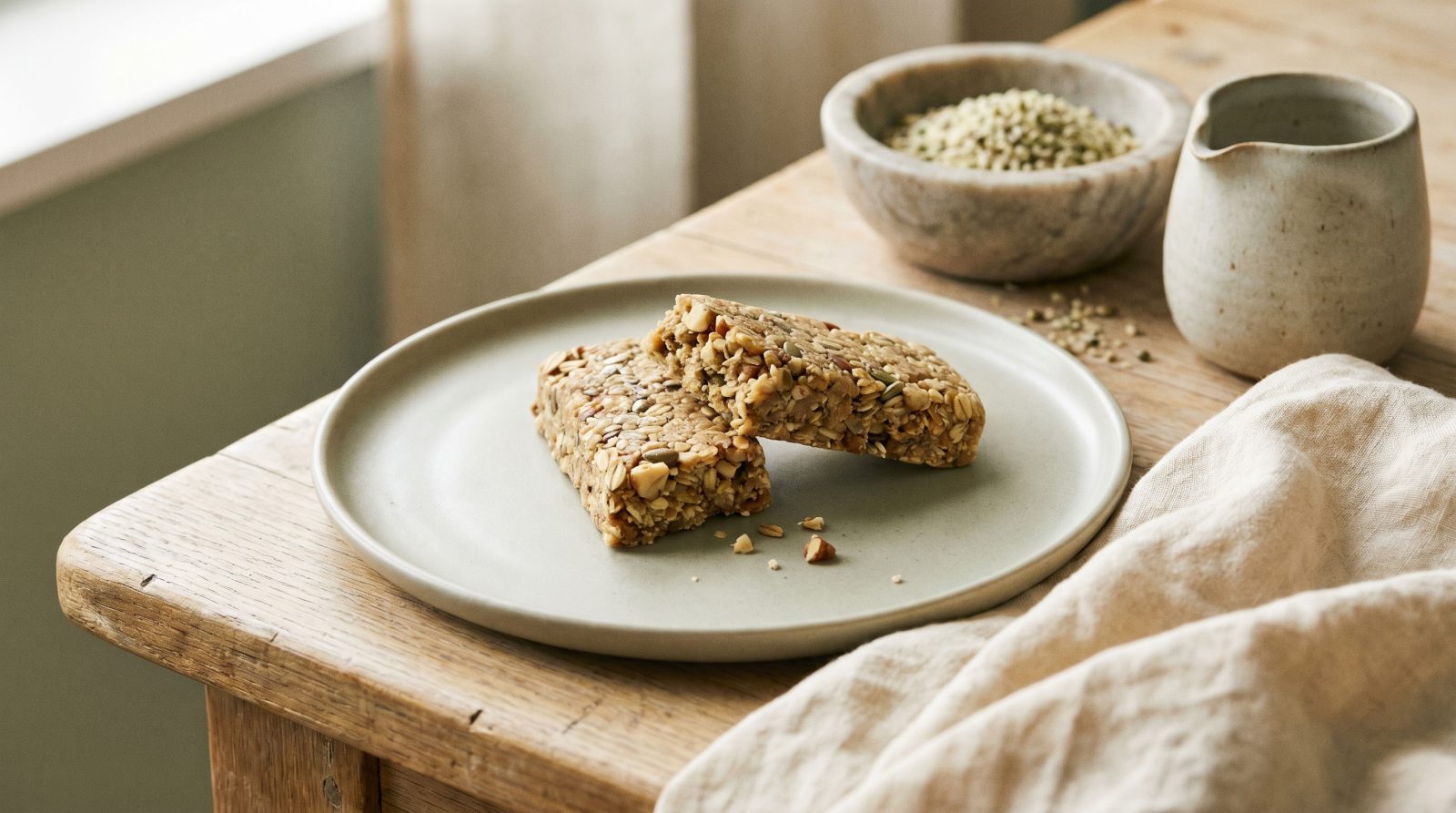
A hemp protein bar is a portable snack or meal-replacement bar whose primary protein source is hemp protein powder or hulled hemp seed. Against a standard whey bar, the differences that matter day to day are digestibility, allergen profile, and fibre.
What "hemp protein bar" actually means
The category covers any bar where hemp is one of the top three protein sources. Most products fall into one of three patterns:
- Hemp-only protein: hemp protein powder is the single protein source. Typically 10-15 g protein per bar. Found in clean-label, single-source brands.
- Hemp-blended protein: hemp combined with pea, brown rice, or soy protein. Typically 15-20 g protein per bar. Hemp contributes fibre, omega-3 fats, and a complete amino acid profile; the second source covers leucine, which hemp is relatively low in.
- Whole-food hemp bars: built around hulled hemp seed rather than isolated protein powder, sweetened with dates or honey, bound with nut butter. Lower protein density (6-12 g) but cleaner ingredient list.
Why people pick hemp protein bars
- Allergen profile: hemp is free of the top eight allergens (dairy, eggs, peanuts, tree nuts, soy, wheat, fish, shellfish), though many bars share facilities with nuts.
- Complete protein: hemp contains all nine essential amino acids, unlike rice or most single-source plant proteins.
- Fibre content: the residual hemp fibre in protein powder delivers 5-12 g of fibre per 30 g serving, useful for digestion and satiety.
- Omega-3 contribution: trace amounts of ALA from the residual hemp oil, plus GLA (gamma-linolenic acid) which is uncommon in other plant protein sources.
- Plant-based without soy: a common request from people avoiding soy isolates for hormonal or digestive reasons.
The protein-quality reality check
Hemp protein has a Protein Digestibility-Corrected Amino Acid Score (PDCAAS) of about 0.49-0.53 for whole hemp seed and 0.63-0.66 for hulled seed, according to a University of Manitoba study; scores for protein powders vary with processing. Whey isolate scores 1.0 and soy isolate around 0.91. The practical implication: at equal grams of protein, hemp delivers slightly less usable amino acid material for muscle protein synthesis.
This is why most hemp protein bars blend hemp with pea protein. The combination's amino acid profile approaches whey-quality, while keeping the bar dairy-free and soy-free.
What to look for on the label
- Protein per bar: 10-20 g is typical. Under 8 g is more snack than protein bar.
- Sugar: bars marketing themselves as protein bars sometimes contain 15+ g of added sugar. Aim for under 8 g added sugar.
- Fibre: 4-8 g is good; bars at 12+ g sometimes use bulking fibres that cause digestive discomfort.
- Protein source order: the protein listed first contributes most of the bar's protein. "Hemp protein blend" without a numerical breakdown can hide a tiny hemp contribution.
- Sweetener: dates, honey, brown rice syrup, allulose, monk fruit, and stevia are reasonable. Avoid bars dependent on sugar alcohols (sorbitol, maltitol), they often cause GI distress.
- Country of origin for the hemp: Canadian and EU hemp is held to documented agricultural standards.
- Best-before date: hemp's polyunsaturated fats mean bars have a shorter shelf life than typical protein bars. 6-12 months from production is normal; older inventory may taste muted.
Where hemp bars fit in your routine
- Pre-workout (60-90 minutes prior): useful. The fibre and slower-digesting protein give steady energy.
- Post-workout: acceptable but slower-absorbing than a whey shake. Pair with a fast-carb source if recovery is time-critical.
- Meal replacement: good fit. Combine with a piece of fruit for a 400-500 calorie lunch substitute.
- Hiking and travel: hemp bars tolerate temperature swings reasonably well and don't melt like chocolate-coated bars.
- Children's lunchboxes: nut-free hemp bars are an option for schools with peanut and tree-nut restrictions.