
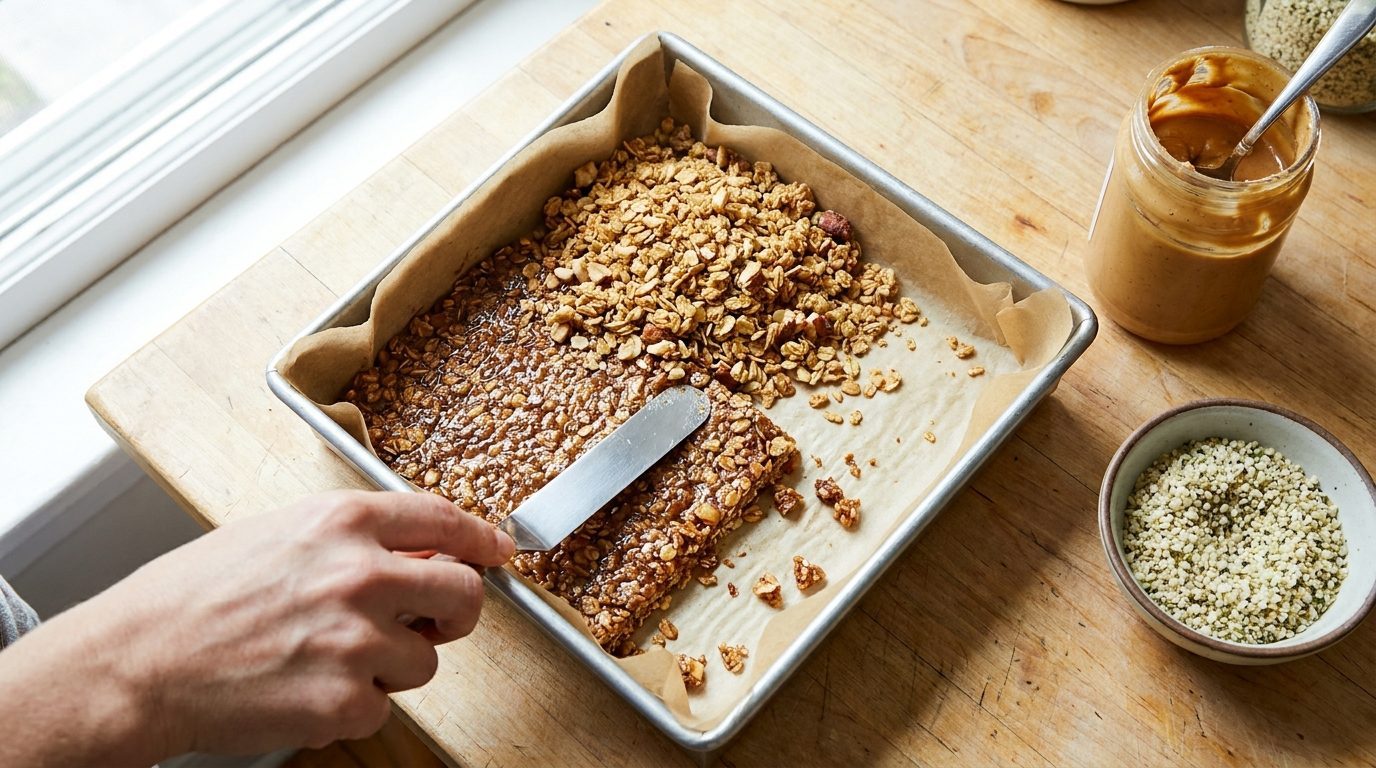
A tray of homemade hemp bars that crumbles the moment the knife goes in is not a failed recipe so much as a failed ratio. Almost every home bar problem traces back to three variables: how much sticky binder you used, how hard you pressed, and how long you chilled.
The ratio that decides everything
A no-bake bar is held together by a continuous film of something sticky coating every dry particle. If any part of the mix is dry enough to stay loose, that is where the bar will break. So the binder is not seasoning, it is structure, and hemp makes the calculation harder than most ingredients.
Hemp protein powder is thirsty. It is fibrous, and it keeps drinking moisture for hours after mixing, which is why a batch that felt perfect in the bowl can be sandy the next morning. The single most common home error is adding an extra scoop of protein for the nutrition numbers without adding any extra binder to match it. Every added spoon of dry powder needs its own share of wet.
The test is tactile rather than measured. Squeeze a handful of the mix hard. If it holds its shape and shows the imprint of your fingers, it will hold as a bar. If it fractures as you open your hand, it needs more binder, added a tablespoon at a time and mixed fully before you judge again.
Symptom, cause, fix
| Symptom | Usual cause | Fix |
|---|---|---|
| Crumbles as you cut it | Not enough binder for the dry volume | Add date paste or syrup a spoon at a time until a squeezed handful holds |
| Perfect cold, collapses at room temperature | Coconut oil is doing the structural work | Replace part of the oil with nut butter, date paste or a thick syrup |
| Dry and dusty by day three | Hemp protein still absorbing moisture | Wrap bars individually, store airtight, and build in more dried fruit next batch |
| Greasy, splitting at the edges | Too much fat relative to sticky sugar | Swap some oil for honey, maple or brown rice syrup |
| Tough, jaw-tiring, cement-like | Over-packed with protein powder | Cut the powder with oat flour or ground seeds; add a little more liquid |
| Firm bottom, loose top | Uneven pressing | Press from the centre outwards, then work the corners deliberately |
Press harder than feels reasonable
Home bars are almost always under-pressed. Line the pan with parchment, tip the mixture in, lay a second sheet of parchment on top, then lean your body weight onto a flat-bottomed glass or a straight-sided measuring cup. You want the surface to go glossy and compact, not merely level. Corners and edges need the most attention because that is where a bar first fails when it is handled.
Then chill properly. An hour in the fridge is a minimum and longer is better, because the binder needs time to set and the hemp protein needs time to finish taking up moisture. Cut cold, with a large knife warmed under hot water and wiped dry, pressing straight down rather than dragging. Dragging a cold blade through a set bar is itself a common cause of crumbled edges.
Choosing a binder for the job
Binders are not interchangeable, and picking the wrong one produces a technically correct recipe that still fails.
- Date paste — the strongest all-round holder, adds fibre and a caramel note, and keeps bars soft for days. Soak and blend until genuinely smooth, since chunks leave dry zones around them.
- Brown rice syrup or honey — very sticky and reliable; both make chewy bars that travel well. The stickiest option per spoonful.
- Nut or seed butter — good structure plus flavour, but the natural, oily kind behaves differently from the stabilized kind. Stir it thoroughly before measuring.
- Melted coconut oil — sets hard and fast, which flatters a photograph and betrays you at room temperature. Use it as a supporting player, never the main binder.
- Maple syrup — lovely flavour, thin body. Treat it as sweetener and count on something else for holding power.
Rescuing a batch that has already failed
Nothing needs to be thrown away. A crumbled tray has three good second lives:
- Roll it into balls. Warm the mixture slightly, add a spoon or two more binder, and roll firmly. Spheres survive handling far better than cut rectangles because there are no edges to fail.
- Re-press it. Gently warm the mix so the fats soften, add binder, and press again in a smaller pan. Thicker bars in a smaller footprint hold together better than thin ones spread wide.
- Turn it into granola. Spread the crumbs on a tray, bake low until dry, and you have a jar of cereal that was never supposed to hold its shape anyway.
Keep a note of what you changed each time, because two batches of adjustments will teach you your kitchen's ratio permanently. Other recipe angles, including bars built for travel and gifting, are collected in the article library.
The short version: when in doubt, more binder, harder press, longer chill. Those three moves fix the overwhelming majority of homemade hemp bar failures, and none of them requires a new recipe.