
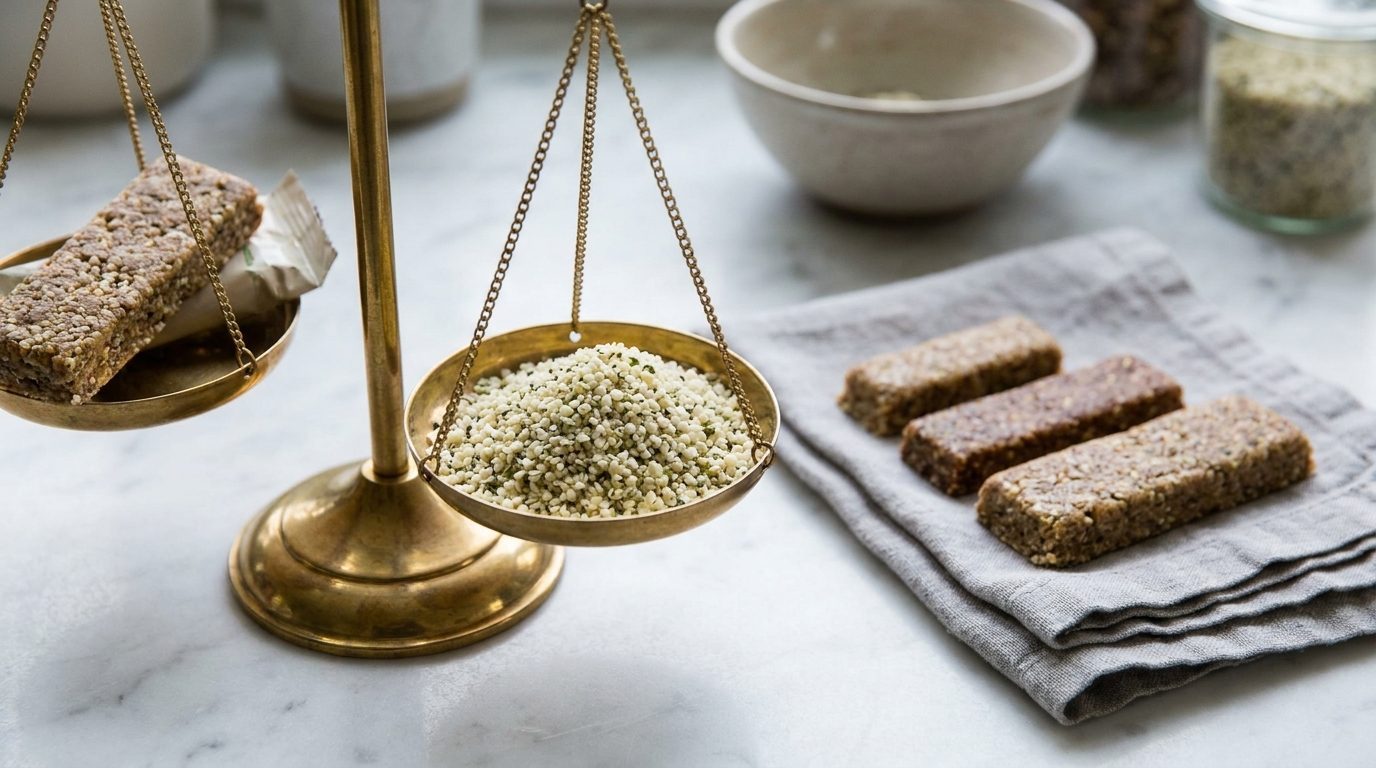
Bar prices are designed to be hard to compare: different weights, different protein loads, different bundle sizes. One division fixes all of it. Price divided by grams of protein is the only number that lets a 45 gram bar argue fairly with a 68 gram one, and it takes five seconds per label.
The arithmetic
A bar costing $3.50 with 10 grams of protein costs 35 cents per protein gram. A $4.25 bar with 20 grams costs 21 cents. The second bar is "more expensive" on the shelf and 40 percent cheaper at the only job a protein bar has. Run this once across your usual options and the rankings rarely match the price tags.
What the number typically shows
- Hemp bars cluster mid-range. Hemp protein is costlier per kilogram than whey or soy, so hemp bars rarely win the raw cents-per-gram race against mass-market whey bars.
- They win a different race. Adjusted for what else arrives with the protein (fibre, omega fats, minerals, a clean allergen profile), hemp bars price competitively against other premium plant bars, the comparison developed in hemp bars versus other bars.
- Format dominates brand. The same bar bought single, by the dozen, or on subscription can swing 30-plus percent per protein gram. The cheapest way to buy a premium bar often beats the dearest way to buy a budget one.
The homemade benchmark
Home bars made from hemp protein, oats, and nut butter land dramatically below any commercial option per protein gram, with the trade-offs being your time and a softer texture. That benchmark is worth knowing even if you never bake: it is the number commercial convenience is charging against, and the method is in making your own.
A worksheet habit
Photograph the shelf, divide at home, and keep the three best ratios in your notes app. Prices drift, formulas shrink, and the five-second division is the only consumer protection the bar aisle offers.