
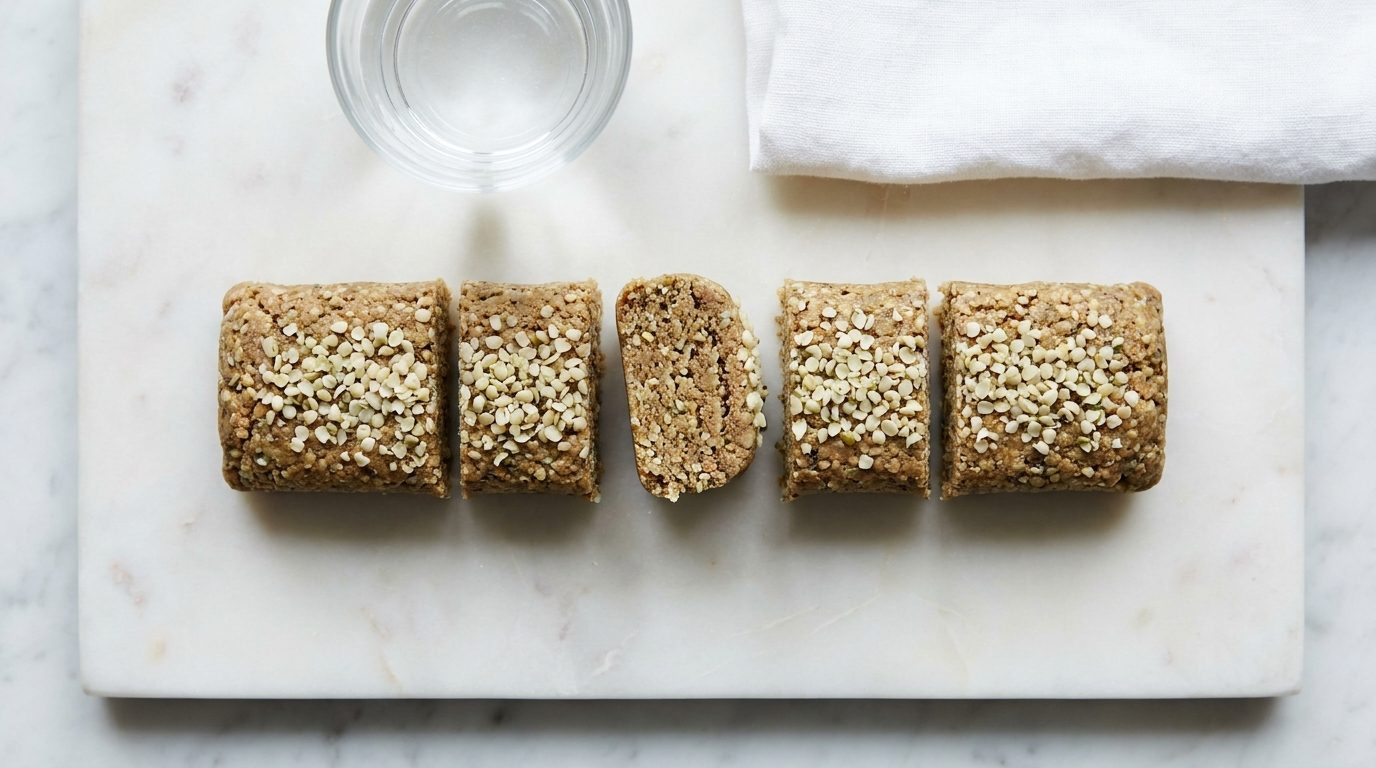
Most protein bars are judged in the worst possible conditions: starving, in a parked car, three hours after lunch, when cardboard would taste excellent. Five deliberate minutes at a table tells you more than a dozen impulse purchases ever will.
Set up a fair comparison
Tasting conditions swing the result more than the bars do, so control them before you unwrap anything.
- Mildly hungry, not ravenous. Mid-morning or mid-afternoon. Hunger flatters everything, especially sweetness.
- Room temperature. Cold mutes off-flavours and hides grit. Judging a bar straight from the fridge is judging the fridge.
- Plain water only. Coffee flatters anything cocoa-based and bulldozes subtler flavours. Save it for afterwards.
- Two or three bars maximum. Palate fatigue arrives quickly with dense, sweet food, and by the fourth bar everything tastes the same.
- Hide the wrappers if you can. Brand loyalty and price both bias the tongue. If someone can unwrap and number them for you, do that.
The five points
- The cross-section. Cut each bar in half and look before you taste. Visible hemp hearts, oat flakes and whole nuts mean the bar was built from ingredients; a uniform brown paste means it was built from powder and syrup. Note air pockets, a chalky matte surface, or an oily ring already soaked into the wrapper.
- First-bite resistance. Does it yield, snap, or fight back? Chewy, dense, crumbly and crisp are all legitimate styles, but jaw fatigue and molar cementing are not. A bar that takes real effort to eat is a bar you will skip on the days you need it most.
- Grit. Press a piece against the roof of your mouth with your tongue rather than chewing. Hemp protein is fibrous, so a fine sandiness is common, and it is different from the pleasant crunch of whole seeds. Chocolate coating disguises grit for the first few seconds, so wait it out.
- Sweetness and the finish. Notice when the sweetness arrives, how long it stays, and what it leaves behind. Erythritol brings a cooling sensation; stevia and monk fruit often land as a lingering note at the back of the tongue; heavy syrup coats and dulls. A gentle green, seedy character is normal in hemp. Sharpness, bitterness that catches in the throat, or anything reminiscent of paint is not, and that bar is either stale or badly formulated.
- Two hours later. The only point you cannot score at the table, and the most predictive. Were you comfortably full or uncomfortably heavy? Any bloating or gut noise from the fibre load? Did you want another, or did the thought of one put you off? Set a timer and write the answer down before you forget.
Scoring, and what the score is actually for
Rate each point from one to five, then double the two-hour score before adding everything up. That weighting is deliberate. Bars are bought on flavour and kept on aftermath, and the ones that quietly get abandoned in a desk drawer almost always failed point five rather than points one through four.
A useful shortcut: a bar that scores middling everywhere usually beats a bar that scores brilliantly on flavour and badly on comfort. You are not choosing a dessert, you are choosing something you will eat repeatedly, often while distracted, sometimes before exercise. Consistency wins.
What to record
Three lines in a notes app is enough, and it is worth more than memory because bar formulas change and your memory quietly rewrites itself around the price you paid.
- Name, flavour, protein grams and the size of the bar.
- Your five scores and one sentence of description in your own words, ideally something concrete like "dry edges, real cocoa, sticks to teeth".
- Where you bought it and whether it was a single or a box, since format changes the value calculation entirely.
After three or four sessions, a pattern shows up: you will discover you consistently prefer a texture rather than a brand, and that makes future shopping much faster. If you want a framework for the flavour vocabulary, cost comparisons or the allergen questions that sit underneath all this, the article library covers them separately.
Run one session before your next big order
The tasting is at its most valuable immediately before a bulk purchase, which is exactly when nobody bothers. Buy single bars of the three candidates, spend five minutes at a table with a glass of water and a knife, set a timer for two hours, and write down what happens. That small amount of friction reliably prevents the classic bar-aisle outcome: a full case of something you were sure you would like, being eaten one reluctant bar at a time.